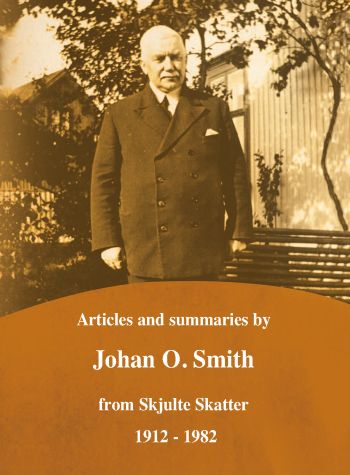
380. Do I Do What I Hate?
Once we have received the forgiveness of sins and have purified ourselves from the sins that the Spirit and our conscience have reminded us about, then the upright desire of every upright soul is to remain in this purity. However, in practice it is evident that this is not possible; we all fall short. The reason is that we lack the power to overcome sin. If in seeking to overcome this hindrance, we pray sincerely for the power of the Holy Spirit over our life, we receive it. Then things start going more easily, and we rejoice in all this power and grace, believing that now all of the old way of life is finished forever. Unfortunately, that is not the case. If you are true and upright, you have to acknowledge that words and deeds come out of you which absolutely do not come from the Holy Spirit. You hate them and judge them, and then you feel happy again. But before you know it, you have again done things which in spirit and truth you hate. You try to return to the state you were in when you received the Holy Spirit because that was when you rejoiced and thought that at last the body of sin was gone. But it is not gone. Before you know it, you have said an unkind word, made a promise and not kept it, spoken evil of a brother, or been a bit sour and cross. Where does all this come from? Sin in the flesh, of course. Then you stop and think to yourself, “Do I really do what I hate?” and you have to answer, “Yes, I do what I hate.” This means you are in perfect agreement with Paul in Romans 7. For you this is not simply a kind of quagmire which you can just jump over, as superficial people teach. The very fact that you hate the evil you have done proves that you are upright and live in self-acknowledgment and self-control. You hate the evil, and God hates it. In this you and God are in agreement. You might decide for yourself, “Now I am going to completely stop doing what I hate, and in the future only do good.” Your intention is very good, but you cannot manage it. Before you know it, you have done what you hate once again. You judge yourself again and again, and finally you come to the conclusion that it is not you who is doing the evil, but it is sin which dwells in you. With your mind you serve the law of God, but with the flesh the law of sin. In this way you are completely and wholly in agreement with the apostle Paul.
So then we come to what is written in Romans 8: “There is therefore now no condemnation to those who are in Christ Jesus, who do not walk according to the flesh, but according to the Spirit. For the law of the Spirit of life in Christ Jesus has made me free from the law of sin and death.” Let us consider these laws one by one. What is the law of sin? When desire has conceived, it gives birth to sin—this is the law of sin. Conception takes place in my mind. For that to happen I must willingly agree with the lusts of the flesh. However, in Romans 7 Paul speaks about serving the law of God with his mind, and by doing so he was free from the law of sin—and from condemnation.
The next law we have been freed from is the law of death. When someone sins, the Spirit of God brings chastening over him, just as the prophet Nathan came to David and chastened him when he had sinned. However if a person will not accept the chastening, sin will become full-grown and bring forth death. This is the law of death. Saul is an example of this; he did not accept the chastening, but rather said to the prophet, “Return with me, and honor me before my people.”
The law of the Spirit of life in Christ Jesus has made me free from both of these laws. And how does this happen? It happens by living in self-judgment. Sin does not get lordship over my life; instead I become a lord over sin. Each person who walks in the light just as He is in the light experiences that the blood of Christ cleanses him from all sin. The old man is crucified, that the body of sin might be done away with, that we should no longer be slaves of sin.
When you have read this, reflected on your own life, and discovered that this is how it is, you will also be saved from the horrible teaching which says that the body of sin was removed by the baptism of the Spirit, and that Romans Chapter 7 is a quagmire that we must jump over. For “all Scripture is given by inspiration of God, and is profitable for doctrine, for reproof, for correction, for instruction in righteousness.” .
Romans Chapter 7 also belongs to this “all Scripture,” and if you do not sense your need for these words of Paul, “What I hate, that I do,” then you lack uprightness.
The consequence of this continual self-judgment is that the righteous are saved with difficulty—because it is difficult to judge yourself.
When we walk in the light, we see our faults, put them to death, and judge them, so that the blood of Christ can cleanse us from all sin.
'%3e%3cpath%20d='M6.54486%2022.9268C6.54486%2022.9268%206.53328%2022.9268%206.52749%2022.921L6.3789%2022.8188C6.36732%2022.811%206.36346%2022.7975%206.36732%2022.784C6.65292%2021.8925%206.79958%2021.3985%206.80151%2021.3946C7.50006%2019.1542%207.57532%2016.4585%207.01956%2013.6044C6.67222%2011.8233%206.53907%209.51924%206.53714%209.49608C6.32294%205.48423%207.3534%203.6568%207.98827%202.92351L8.02687%202.91772L8.17931%203.00456C8.19089%203.01228%208.19668%203.02579%208.19282%203.0393C7.99406%203.68189%207.87056%204.34956%207.87056%204.35535C7.42866%207.10132%207.83583%2012.0433%208.24878%2014.5172C8.67332%2017.0625%208.38579%2019.2411%208.38386%2019.2623C8.03073%2021.4274%207.09289%2022.483%206.56608%2022.9191L6.54678%2022.9268H6.54486Z'%20fill='black'/%3e%3cpath%20d='M17.0135%2026.4292C17.0135%2026.4292%2017.0019%2026.4292%2016.9961%2026.4234L16.8475%2026.3212C16.836%2026.3134%2016.8321%2026.2999%2016.836%2026.2864C17.0772%2025.5377%2017.2219%2025.0591%2017.2605%2024.9318C17.9648%2022.6682%2018.0439%2019.9609%2017.4882%2017.1088C17.1408%2015.3257%2017.0077%2013.0236%2017.0058%2013.0004C16.7896%208.9519%2017.8259%207.13604%2018.4627%206.41241L18.5013%206.40662L18.6518%206.49538C18.6634%206.5031%2018.6692%206.51661%2018.6653%206.53205C18.4646%207.17464%2018.3392%207.85582%2018.3392%207.86161C18.0845%209.4459%2018.1308%2011.6245%2018.2138%2013.1741L18.2215%2013.3227L18.3527%2013.2532C19.6437%2012.5797%2020.7069%2011.9005%2021.3708%2011.4509L21.4113%2011.4547L21.5271%2011.5782C21.5367%2011.5898%2021.5386%2011.6072%2021.5271%2011.6187C20.4464%2012.983%2018.4318%2014.4554%2018.3469%2014.5172L18.3141%2014.5422L18.3083%2014.5828C18.4125%2015.8641%2018.5572%2017.0779%2018.7136%2018.0234C19.1381%2020.5687%2018.8506%2022.7493%2018.8486%2022.7705C18.4955%2024.9356%2017.5577%2025.9912%2017.0309%2026.4273L17.0116%2026.435L17.0135%2026.4292Z'%20fill='black'/%3e%3cpath%20d='M10.9639%2028C10.9639%2028%2010.9484%2027.9981%2010.9446%2027.9923L10.8076%2027.8707C10.7979%2027.8611%2010.794%2027.8476%2010.7998%2027.836C11.2919%2026.5778%2011.5756%2025.804%2011.6277%2025.6612C12.7874%2022.5891%2012.9129%2018.9014%2011.9885%2014.9957C11.4116%2012.5566%2011.1877%209.39959%2011.1858%209.37064C10.7844%203.16664%2013.0344%200.750655%2014.0205%200H14.0591L14.198%200.111923C14.2077%200.121571%2014.2135%200.135079%2014.2077%200.148587C13.8005%201.09221%2013.5227%202.31564%2013.5207%202.32722C12.7874%206.08821%2013.4609%2012.8538%2014.1479%2016.2442C14.8561%2019.7389%2014.3756%2022.7203%2014.3717%2022.7512C13.704%2026.1185%2011.7782%2027.5407%2010.9812%2027.9961L10.9658%2028H10.9639Z'%20fill='black'/%3e%3c/g%3e%3cdefs%3e%3cclipPath%20id='clip0_3867_12532'%3e%3crect%20width='28'%20height='28'%20fill='white'/%3e%3c/clipPath%3e%3c/defs%3e%3c/svg%3e)