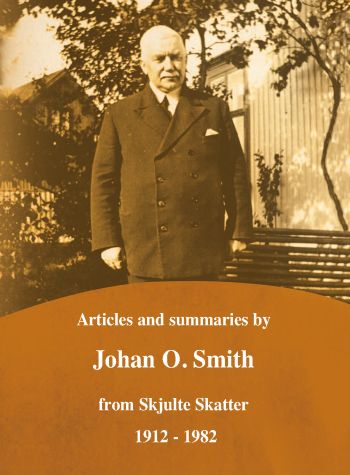
304. “Sin and Grace”
We often hear people preaching about “sin and grace.” More often than not, their preaching never goes beyond that. What they mean when they speak about sin and grace is that we have to sin, and that grace is the forgiveness for sins.
However in we read: “Therefore do not let sin reign in your mortal body,” and in : “For sin shall not have dominion over you, for you are not under law but under grace.”
This tells us very clearly that sin and the law belong together. The law was given for the sake of the transgressors. Sin is a transgression of the law. Sin brings punishment. He who sins has neither seen Him nor known Him, for whoever abides in Him does not sin. . He who commits sin is of the devil, for the devil has sinned from the beginning. But the Son of God was manifested that He might destroy the works of the devil. .
Grace has not been given to us that we should serve sin and then pray for grace and forgiveness. Yet that is the distinct impression that comes through all this preaching about “sin and grace.”
What is grace? Grace is the light and life within the body of Christ where I personally have not yet received light and life. Grace reigns through righteousness to eternal life. . In other words, we can say that grace reigns through righteousness to righteousness because eternal life is a life in righteousness. However, converted people are using grace purely as a means of cleansing themselves from committed sin and ungodliness. This is not the purpose of grace. Those who receive abundance of grace and of the gift of righteousness are called to live and reign through the One, Jesus Christ. . To live and reign through Jesus Christ on the basis of grace is totally different from sinning, receiving grace, and then continuing to sin. “Shall we continue in sin that grace may abound? Certainly not!” . Nevertheless, this doctrine of “sin and grace” darkens people’s minds and makes them stupid. It gives them the definite impression that they have to continue in sin so that grace might abound. We who have died to sin—are crucified to sin—how could we still live any longer in it?
As a co-worker Paul exhorts the Corinthians not to receive the grace of God in vain. . By God’s grace Paul was what he was, and God’s grace toward him was not in vain. . However, the doctrine of “sin and grace”—as it is commonly understood—causes grace to be totally in vain. People are held down in darkness, ignorance, and sin—invoking grace over it all.
We have received forgiveness of sins through the abundant riches of His grace (), but not so that we continue in sin.
He who is in the flesh and lives according to the flesh is a slave of sin, and everyone who desires to be justified by the law has fallen from grace. .
“For the grace of God that brings salvation has appeared to all men, teaching us that, denying ungodliness and worldly lusts, we should live soberly, righteously, and godly in this present age.” . The apostle Paul understood what grace really is: grace is the power to keep sin underfoot. Despite the fact that we have sin in the flesh because of the fall, we must reign over it through the grace of God. However people would rather sin than suffer. This is the reason for—and the source of—the doctrine of “sin and grace.” The fellowship of the sufferings of Christ is a concept that is quite unknown, and so is the understanding of being crucified with Christ. and . But the concept of sinning and then receiving grace is very well known. What is less known is that those who receive grace in this way receive grace in vain.
One scripture regarding this that has been totally distorted is this: “The blood of Jesus Christ His Son cleanses us from all sin.” What is actually written, however, is: “But if we walk in the light as He is in the light, we have fellowship with one another, and the blood of Jesus Christ His Son cleanses us from all sin.” .
It is only when we walk in the light that grace is not in vain, and only then can we be cleansed from all sin. But if we sin, relying on grace, we will never cease sinning. Only he who has suffered in the flesh has ceased from sin. .
What does this mean? It means that the miser makes a conscious effort to be generous. By constantly exercising himself in this, he will cease from the sin of stinginess. The gossip exercises himself in keeping his mouth closed, the proud person exercises himself in humility, the glutton in moderation, etc. Then they will cease from sin. But all this talk about sin and grace amounts to nothing more than a lifetime of “marching in place.”
Therefore, away with all these doctrines which make people so stupid! Let us lay hold of the clear Word of Scripture by the revelation of the Word through the Spirit of Jesus Christ.
“You search the Scriptures, for in them you think you have eternal life . . . . But you are not willing to come to Me that you may have life.”
We should learn from Jesus and do as He did. Read . Jesus began both to do and to teach until the day He was taken up.
So the sequence is: do, and then teach. Every sensible person should turn away from everyone who teaches first and never does God’s Word. Yet such teachers are doing something. They are begging for money for their own work. Consequently their doctrine ends up as nothing more than sin and grace because they continue to live in sin as it is written: “And whatever they know naturally, like brute beasts, in these things they corrupt themselves.” . Nothing good dwells in our human nature. Therefore when people interpret the Scriptures without the revelation of the Spirit, all they can come up with is an understanding according to their natural human tendencies. With this understanding they corrupt themselves and those who listen to them. But people like it this way, and so the doctrine of “sin and grace” flourishes. And so they escape from suffering and from being crucified because they are well taught to become enemies of the cross of Christ.
'%3e%3cpath%20d='M6.54486%2022.9268C6.54486%2022.9268%206.53328%2022.9268%206.52749%2022.921L6.3789%2022.8188C6.36732%2022.811%206.36346%2022.7975%206.36732%2022.784C6.65292%2021.8925%206.79958%2021.3985%206.80151%2021.3946C7.50006%2019.1542%207.57532%2016.4585%207.01956%2013.6044C6.67222%2011.8233%206.53907%209.51924%206.53714%209.49608C6.32294%205.48423%207.3534%203.6568%207.98827%202.92351L8.02687%202.91772L8.17931%203.00456C8.19089%203.01228%208.19668%203.02579%208.19282%203.0393C7.99406%203.68189%207.87056%204.34956%207.87056%204.35535C7.42866%207.10132%207.83583%2012.0433%208.24878%2014.5172C8.67332%2017.0625%208.38579%2019.2411%208.38386%2019.2623C8.03073%2021.4274%207.09289%2022.483%206.56608%2022.9191L6.54678%2022.9268H6.54486Z'%20fill='black'/%3e%3cpath%20d='M17.0135%2026.4292C17.0135%2026.4292%2017.0019%2026.4292%2016.9961%2026.4234L16.8475%2026.3212C16.836%2026.3134%2016.8321%2026.2999%2016.836%2026.2864C17.0772%2025.5377%2017.2219%2025.0591%2017.2605%2024.9318C17.9648%2022.6682%2018.0439%2019.9609%2017.4882%2017.1088C17.1408%2015.3257%2017.0077%2013.0236%2017.0058%2013.0004C16.7896%208.9519%2017.8259%207.13604%2018.4627%206.41241L18.5013%206.40662L18.6518%206.49538C18.6634%206.5031%2018.6692%206.51661%2018.6653%206.53205C18.4646%207.17464%2018.3392%207.85582%2018.3392%207.86161C18.0845%209.4459%2018.1308%2011.6245%2018.2138%2013.1741L18.2215%2013.3227L18.3527%2013.2532C19.6437%2012.5797%2020.7069%2011.9005%2021.3708%2011.4509L21.4113%2011.4547L21.5271%2011.5782C21.5367%2011.5898%2021.5386%2011.6072%2021.5271%2011.6187C20.4464%2012.983%2018.4318%2014.4554%2018.3469%2014.5172L18.3141%2014.5422L18.3083%2014.5828C18.4125%2015.8641%2018.5572%2017.0779%2018.7136%2018.0234C19.1381%2020.5687%2018.8506%2022.7493%2018.8486%2022.7705C18.4955%2024.9356%2017.5577%2025.9912%2017.0309%2026.4273L17.0116%2026.435L17.0135%2026.4292Z'%20fill='black'/%3e%3cpath%20d='M10.9639%2028C10.9639%2028%2010.9484%2027.9981%2010.9446%2027.9923L10.8076%2027.8707C10.7979%2027.8611%2010.794%2027.8476%2010.7998%2027.836C11.2919%2026.5778%2011.5756%2025.804%2011.6277%2025.6612C12.7874%2022.5891%2012.9129%2018.9014%2011.9885%2014.9957C11.4116%2012.5566%2011.1877%209.39959%2011.1858%209.37064C10.7844%203.16664%2013.0344%200.750655%2014.0205%200H14.0591L14.198%200.111923C14.2077%200.121571%2014.2135%200.135079%2014.2077%200.148587C13.8005%201.09221%2013.5227%202.31564%2013.5207%202.32722C12.7874%206.08821%2013.4609%2012.8538%2014.1479%2016.2442C14.8561%2019.7389%2014.3756%2022.7203%2014.3717%2022.7512C13.704%2026.1185%2011.7782%2027.5407%2010.9812%2027.9961L10.9658%2028H10.9639Z'%20fill='black'/%3e%3c/g%3e%3cdefs%3e%3cclipPath%20id='clip0_3867_12532'%3e%3crect%20width='28'%20height='28'%20fill='white'/%3e%3c/clipPath%3e%3c/defs%3e%3c/svg%3e)