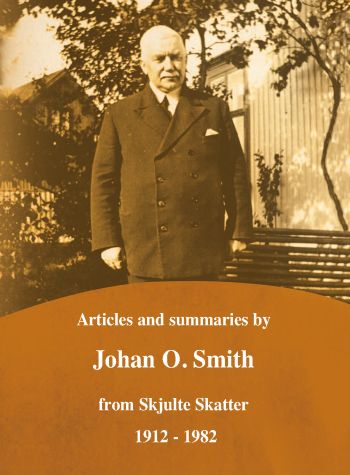
262. What We Believe
It might be profitable in these times of unbelief and upheaval to state what we actually believe, especially now that many people are beginning to have their eyes enlightened to the fact that they have been held in darkness for so long, either because they have not walked in God’s light or because they blindly trusted blind leaders who have misrepresented what we teach from the Word of God.
1. We believe in an almighty God and Father, in His Son, Jesus Christ, and in the Holy Spirit.
2. We believe that Jesus Christ was conceived of the Holy Spirit and born of the virgin Mary, according to the Scriptures.
3. We believe that inasmuch as the children have partaken in flesh and blood, Jesus Himself likewise had to share in the same, in order to be able to aid us in our need and save us from our fallen state; for indeed He does not give aid to angels, but He does give aid to the seed of Abraham. .
Temptations
4. We believe that Jesus, in the days of His flesh, was tempted exactly as we are, because He took upon Himself a human flesh on account of sin. We also believe that He overcame in every temptation because He did not have an earthly father, but was conceived by the Holy Spirit. In the power of this Spirit, He was able to have such perfect victory in all of the various temptations that no guile was found in His mouth, neither could anyone convict Him of sin. ; .
We believe that Jesus won His great victory by suffering in the flesh that He had been born with, being of the seed of David. ; . We believe He suffered all the way through the flesh, thereby condemning all sin in the flesh. . He thereby consecrated a new and living way through the veil, that is, His flesh. This work began as soon as Jesus learned to discern between good and evil, and it was completed on the cross at Calvary when He cried out, “It is finished.” Then the veil between the Holy Place and the Holy of Holies was rent from top to bottom. A way had been consecrated through the flesh to the Father. This is the way of self-denial, the way of the cross, the way of suffering, and the way of death.
We believe that saved sinners have access to this way, the way of the Master, but that only a few Christians walk on it because most of them are enemies of the cross of Christ and the sufferings of Christ. ; . “For if when we were enemies we were reconciled to God through the death of His Son [through the forgiveness of sins], much more, having been reconciled, we shall be saved by His life.” . To be saved by His life means that we walk in the light; we walk on the way after we have received forgiveness.
The Holy Spirit
5. We believe that the sum total of all the work that took place in Christ is contained in His Spirit. For it is written that Jesus suffered death in the flesh and was made alive in the spirit [Norw.]. Therefore the Spirit of Jesus Christ, who is the last Adam, has become a life-giving spirit. After Jesus arose from the dead and was glorified by His Father, He received the promised Holy Spirit and poured it out on the day of Pentecost. . Now everyone who obeys the Spirit will receive it. . Jesus Christ, from His exalted place, can through His Spirit convict the world of sin, of righteousness, and of judgment because the Spirit does not speak of Himself, but He speaks what He hears. . Those who have an ear to hear are thus led into all truth and to an overcoming life. However those who will not hear wander around aimlessly, lead astray by their flesh, even though they may be full to the brim with Bible verses, serving as priests, pastors, or religious leaders. All of it is equally corrupt because Jesus Christ cannot lead them by His good Spirit, from His exalted throne. He is the Chief Shepherd.
Baptism
6. We believe in adult baptism, since God cannot enter into a covenant with small children who do not have a conscious life. None of these little ones have lived anything that resembles an old life so that after baptism they would be expected to live in newness of life. Since they have not committed sin, they do not have a body of the sins of the flesh that has to be put off. They are innocent, and the kingdom of heaven belongs to them.
However, we know that adults have lived according to the flesh; therefore they are in need of the circumcision of Christ to put off their body of flesh—the body that has committed sin. . This body has to be buried with Him so that we can be raised up together with Him to walk in newness of life. .
In Noah’s day, eight souls were saved through water, which now saves us by its antitype—baptism. Those who feared God were borne up above the water in the ark, while the ungodly drowned. These eight souls were let down onto the new earth, to live a new life, a life which was quite different from the lives of those who perished. . The same happens with us: We put off the body of flesh; we are raised up (through the ark, Christ) to walk in newness of life. We have entered into a personal covenant with God according to our conscience, to live a new life.
The Breaking of Bread
7. We believe in the breaking of bread (communion) because it is written: And He took bread, gave thanks and broke it, and gave it to them, saying, “This is My body which is given for you; do this in remembrance of Me.”
Likewise He also took the cup after supper, saying, “This cup is the new covenant in My blood, which is shed for you.” .
Jesus’ body was broken, therefore the bread can be broken, since He died for our sins and to our sin. We are now baptized with one Spirit to be one body, a body that is dead according to the flesh because He suffered death according to the flesh, and we are dead with Him so we can live with Him. If Christ is in you, then the body is dead because of sin; that is to say, the commandments or the directions for my life do not come from my body because sin dwells there. However, the Spirit is life because of righteousness, which means that Christ guides my life by His good Holy Spirit. When I am led by the Spirit, the flesh with its passions and desires is crucified; they are not allowed to rule; they are dead and powerless. For this reason it is written: “I beseech you therefore, brethren, by the mercies of God, that you present your bodies a living sacrifice, holy, acceptable to God, which is your reasonable service.” . Even though the body is dead because of sin, it is also living when it is placed under the guidance of the Spirit, just as an axe is dead by itself, but becomes alive when someone uses it.
This is the death that is proclaimed during the breaking of the bread. Should anyone partake of the bread or drink of the cup in an unworthy manner, then he sins against the body of the Lord, because the Lord kept His body in death all the time He was on earth and ultimately sacrificed it on the cross. He always lived with this mind: “Let not My will, but Yours, be done.” He sacrificed His will which He received when He partook of the same flesh as the children. . He sought the Father’s will and good pleasure. But the one who lives according to his lusts—even if it is only once in awhile—does not keep his body dead because of sin, but allows it to rule. Then the body is presented as an instrument of sin, which is in direct contrast to the Spirit that is in the breaking of bread. As a result of this, he eats and drinks judgment to himself by partaking in an unworthy manner. The breaking of bread is a time of deep reflection. He who eats and drinks unworthily eats and drinks judgment to himself, not discerning the Lord’s body. This word “discerning” clearly refers to separating between two things. The way in which it is written makes it somewhat difficult to understand, but for my own part I have thought of it as a person not discerning between his own body as a sinner and the body of Christ that has never sinned, and which has now died to all sin. Such people preach the death of Christ, even though it is evident that they are not dead with Him in reality. Thereby, such a person eats and drinks judgment to himself. .
Jesus said: “This cup is the new covenant in My blood.” We can speak about His cup in two different ways: first, that His blood was shed for us (this is His cup), and second, that we, in accordance with the laws of the new covenant, strive against sin in the flesh until bloodshed (which is our cup with Him). So when we proclaim the death of Christ, we also proclaim at the same time that we are faithful to the laws of the new covenant unto bloodshed, for the cup is a covenant with Him in His blood, and a covenant must by necessity be entered into by at least two parties.
Seen in this light, it becomes a serious matter to eat the bread and drink the cup, and for this reason it is necessary for each and every one to examine himself. Since there are those that eat and drink in an unworthy manner, many become sick and weak, and many sleep. . This is a result of acting hypocritically during the breaking of bread, presenting oneself to be more pious than one really is by proclaiming the death of Christ while not actually practicing it. Therefore God has to punish them with sickness in order to cause them to reflect on their state. If this does not help, then they can fall asleep, either spiritually or quite literally by dying.
Unity
8. We believe in the unity of the body of Christ, for we have been baptized by one Spirit into one body, and we have all been made to drink of one Spirit, whether we are Jews or Greeks. . If we are all led by the same Spirit and are obedient to this one Spirit, then our fellowship of the Spirit will be in order, and our relationship to the Father and the Son will be as God desires it to be. This is the unity of the body which is the church. The Father, the Son, and the Holy Spirit did not establish any other church on this earth. Yet there are plenty of churches where fornicators, thieves, harlot Christians, and all kinds of devilish spirits wreak havoc. These are imitations created by Satan, the one who copies what God has created in order to make things look as black as possible. But we know that such true unity really does exist, a fellowship of the Spirit. We are speaking from our own experience. Not that we have been perfected, but there is a perfection in our attitude of mind, and that makes us one.
Even in this unity Satan can do damage when every single person does not keep his flesh crucified with Christ. A little unrighteousness committed by one person has the same effect as sticking a needle into the body. All of the body’s energy goes into removing the needle—which is the same as getting rid of the sin because fellowship with the Father and the Son does not tolerate sin; neither does our fellowship with one another tolerate it. Our fellowship is in the Spirit. So, be diligent to maintain fellowship; keep the unity of the Spirit in the bond of peace. If at any time this fellowship is broken, it is not an easy matter to repair it.
'%3e%3cpath%20d='M6.54486%2022.9268C6.54486%2022.9268%206.53328%2022.9268%206.52749%2022.921L6.3789%2022.8188C6.36732%2022.811%206.36346%2022.7975%206.36732%2022.784C6.65292%2021.8925%206.79958%2021.3985%206.80151%2021.3946C7.50006%2019.1542%207.57532%2016.4585%207.01956%2013.6044C6.67222%2011.8233%206.53907%209.51924%206.53714%209.49608C6.32294%205.48423%207.3534%203.6568%207.98827%202.92351L8.02687%202.91772L8.17931%203.00456C8.19089%203.01228%208.19668%203.02579%208.19282%203.0393C7.99406%203.68189%207.87056%204.34956%207.87056%204.35535C7.42866%207.10132%207.83583%2012.0433%208.24878%2014.5172C8.67332%2017.0625%208.38579%2019.2411%208.38386%2019.2623C8.03073%2021.4274%207.09289%2022.483%206.56608%2022.9191L6.54678%2022.9268H6.54486Z'%20fill='black'/%3e%3cpath%20d='M17.0135%2026.4292C17.0135%2026.4292%2017.0019%2026.4292%2016.9961%2026.4234L16.8475%2026.3212C16.836%2026.3134%2016.8321%2026.2999%2016.836%2026.2864C17.0772%2025.5377%2017.2219%2025.0591%2017.2605%2024.9318C17.9648%2022.6682%2018.0439%2019.9609%2017.4882%2017.1088C17.1408%2015.3257%2017.0077%2013.0236%2017.0058%2013.0004C16.7896%208.9519%2017.8259%207.13604%2018.4627%206.41241L18.5013%206.40662L18.6518%206.49538C18.6634%206.5031%2018.6692%206.51661%2018.6653%206.53205C18.4646%207.17464%2018.3392%207.85582%2018.3392%207.86161C18.0845%209.4459%2018.1308%2011.6245%2018.2138%2013.1741L18.2215%2013.3227L18.3527%2013.2532C19.6437%2012.5797%2020.7069%2011.9005%2021.3708%2011.4509L21.4113%2011.4547L21.5271%2011.5782C21.5367%2011.5898%2021.5386%2011.6072%2021.5271%2011.6187C20.4464%2012.983%2018.4318%2014.4554%2018.3469%2014.5172L18.3141%2014.5422L18.3083%2014.5828C18.4125%2015.8641%2018.5572%2017.0779%2018.7136%2018.0234C19.1381%2020.5687%2018.8506%2022.7493%2018.8486%2022.7705C18.4955%2024.9356%2017.5577%2025.9912%2017.0309%2026.4273L17.0116%2026.435L17.0135%2026.4292Z'%20fill='black'/%3e%3cpath%20d='M10.9639%2028C10.9639%2028%2010.9484%2027.9981%2010.9446%2027.9923L10.8076%2027.8707C10.7979%2027.8611%2010.794%2027.8476%2010.7998%2027.836C11.2919%2026.5778%2011.5756%2025.804%2011.6277%2025.6612C12.7874%2022.5891%2012.9129%2018.9014%2011.9885%2014.9957C11.4116%2012.5566%2011.1877%209.39959%2011.1858%209.37064C10.7844%203.16664%2013.0344%200.750655%2014.0205%200H14.0591L14.198%200.111923C14.2077%200.121571%2014.2135%200.135079%2014.2077%200.148587C13.8005%201.09221%2013.5227%202.31564%2013.5207%202.32722C12.7874%206.08821%2013.4609%2012.8538%2014.1479%2016.2442C14.8561%2019.7389%2014.3756%2022.7203%2014.3717%2022.7512C13.704%2026.1185%2011.7782%2027.5407%2010.9812%2027.9961L10.9658%2028H10.9639Z'%20fill='black'/%3e%3c/g%3e%3cdefs%3e%3cclipPath%20id='clip0_3867_12532'%3e%3crect%20width='28'%20height='28'%20fill='white'/%3e%3c/clipPath%3e%3c/defs%3e%3c/svg%3e)