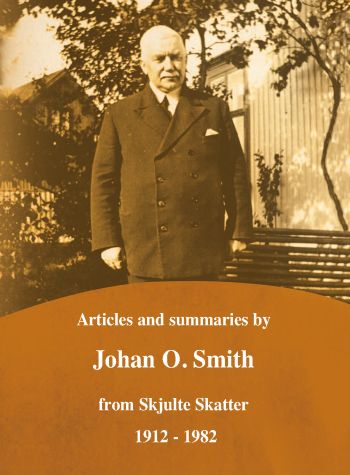
197. Soul and Spirit
From the book Soul and Spirit by Jesse Penn-Lewis (1861–1927).
The ignorance of Christians concerning the distinction between soul and spirit is quite universal. As a rule, the reason for this lies in the fact that in their personal life they do not develop in the spirit to the point where knowledge about the division between soul and spirit becomes a vital necessity for further progress. They are content to remain “soulish” Christians, and never reach further to become “spiritual” Christians. The believers do not receive further instruction from the pulpit about the things which could throw light over such a division because the preaching is usually directed to sinners about conversion. Moreover, the words “soul” and “spirit” are quite often used interchangeably, both correctly and incorrectly, with the result that the listeners receive a confused idea of the whole matter, and they usually conclude that soul and spirit must be one and the same thing.
Mrs. Penn-Lewis writes: “Of course Greek scholars know well the different words in the original which stand for spirit—pneuma; soul—psuche; flesh—sarx.” Since these words will appear quite often later on during the exposition of this theme, one would do well to remember these terms in the original language.
The longing for the knowledge of God is probably present in many believers, but Satan makes it difficult for them. As a rule, by not believing or relying on the testimony of the Spirit, they give up even at the beginning of their spiritual development. That is why it is necessary for the doctrines of the Scriptures concerning the difference between soul and spirit to be presented as clearly as possible, so that even the youngest believer can understand this difference.
“The Holy Spirit . . . He will teach you all things.” . We can safely rely on the instruction of the Spirit. He will teach the attentive disciples so that they will be able to discern between soul and spirit through personal experience without knowing Greek. The understanding that is enlightened by the Spirit will lay hold of and retain the Word until one has drawn out the spiritual meaning from the written letter. But the natural (soulish) man cannot comprehend the things of the Spirit of God, for this is only given by revelation to those who believe.
The Soul and Its Function
What is the soul, as distinct from the spirit, and what are its functions? The soul stands between the spirit and the body, because a direct communication between spirit and flesh is impossible. This connection can only be accomplished through a medium, and that medium is the soul. The soul “was the meeting-place, the point of union between body and spirit,” also writes Dr. Andrew Murray. Although the soul is related to the outside world through the bodily senses, it is also related to the spiritual world through the spirit.
G.H. Pember explains the function of each very clearly when he says, “The body we may term the sense-consciousness, the soul the self-consciousness, and the spirit the God-consciousness.” Again he says, the body “gives us the use of the five senses”; and the soul, the “intellect that aids us in the present state of existence, and the emotions which proceed from the senses”; while the spirit is the highest part which “came directly from God, and by which alone we apprehend and worship Him.”
Dr. Andrew Murray agrees with this when he writes that the gifts with which the soul was endowed when man became a “living soul,” were those of “consciousness, self-determination, or mind and will”; and these were to be but the “mold, or vessel” into which the life of the spirit was to be received.
Again, Pember writes concerning the creation of man, and how the tripartite being was formed—“God first molded the senseless frame, and then breathed into it the ‘breath of lives’.” . (The original is in the plural) and this “may refer to the fact that the inbreathing of God produced a two-fold life—sensual (in the meaning of pertaining to the senses) and spiritual . . . .” He adds in a footnote that possibly the meaning of the use of the plural in the “breath of lives” is that the “inbreathing of God became the spirit, and at the same time by its action upon the body, produced the soul.”
We see that all these writers basically define the soul as the seat of the personality [the will and the intellect or mind] standing between the spirit with its openness to the spiritual world, and the body—that is open to the outer world. The soul has thus the power of choice as to which of these will dominate or control the entire man.
The Fall of Man
But alas, man fell, and after a time the result was seen as described by the Lord Himself in His words: “That every intent of the thoughts of his heart was only evil continually.” . The fall apparently began in the intellectual part of the soul, for it is said that Eve saw that it was “a tree desirable to make one wise.” . The appeal of the serpent was not made to the vessel of clay (or the outer man), for the body was then perfectly dominated by the spirit; but it was directed to the intellect and understanding of man, and it was based on a permissible desire to advance in knowledge and power in the unknown realm of another world. “You will be like God,” said the serpent, not “You will be as the beasts” created by God! The temptation was knowledge, and the very knowledge that God probably meant to give in due season, but grasped before its time, and out of God’s will.
The words of the apostle Paul in are therefore very significant in connection with this aspect of the fall, for “the word of the cross” is said by the apostle to be God’s power to destroy the wisdom of the wise. Since sin entered through the avenue of the intellect, salvation comes by a cross which destroys the fallen “wisdom” by the very acceptance of its message, for the preaching of “Christ crucified” is to the wisdom of men foolishness. . Thus God, in His wisdom, provides salvation in a way that deals with the cause by which the fall came about! Therefore Paul writes, “If anyone among you seems to be wise . . . let him become a fool that he may become wise. For the wisdom of this world is foolishness with God.” .
Eve, moreover, fell through yielding to the very temptation which had caused the fall of Satan himself, for he had said: “I will be like the Most High.” . The tempter knew how to attract Eve by suggesting to her something higher than she possessed, for she was limited by a body made of dust but had a soul capable of appreciating knowledge and growth through the higher part of the tripartite being.
The full effect of the downfall we do not see until years later, when the record of the condition of the race shows that the road down was rapid, for the knowledge of good and evil that man received in the Garden of Eden reached its ultimate in due course, in a complete sinking into “flesh,” so that the part of man’s tripartite nature which he had in common with the animal creation obtained the upper hand. Then it was that God looked down upon the fallen race and said: “My Spirit shall not strive with man forever, for he is indeed flesh.” . And so it is, that not only has death reigned over the fallen race of Adam, but every human being born in the likeness of the first Adam is of the earth, earthly, and is dominated by the flesh instead of the spirit. The soul, which is the personality of “himself” (), is a slave of the flesh and the earthly life instead of being a servant of the spirit.
The human spirit, which was ministered to by God, has fallen and become alienated from the life of God (), separated from Christ () and incapable of following Him.
The body with its desires and tastes dominates the soul and enslaves it. But while the human spirit is “dead to God” and in darkness, it remains as full of activity as mind and body. In some instances the spirit of the fallen man is so strong in its activity that even in its darkened condition it dominates both soul and body. Then the man may be said to be “spiritually sensitive,” possessing more spirit than others who are mainly soulish or carnal. These are people who seek to communicate with the spirit world apart from the Holy Spirit of God and become mediums, capable of exercising “occult power” such as clairvoyance, etc. They obtain their power by satanic means, for unless the human spirit of man is born-again and indwelt by the Holy Spirit of God, it is in unity with the fallen spirits of Satan and governed by “the prince of the power of the air, the spirit who now works in the sons of disobedience.” .
We see, therefore, that the fallen spirit of man, forsaken by God at the fall, sank down—so to speak—into the vessel of the soul, and the soul in turn sank down into the fleshly body—under what Paul calls “the power of the flesh”—so that in the unconverted, the soul, manifested sometimes in intellectuality, sometimes in sensuality, often in both, reigns over them with undisputed control. This is what Jude wants to point out in which should read: “These are the ones who separate themselves, people ruled by the soul, and who do not have the spirit.”
Fausset brings this out: “In the three-fold division of man’s being . . . the due state in God’s design is that the spirit . . . should be first, and should rule the soul, which stands intermediate between body and spirit, but in the . . . natural man, the spirit is sunk into subservience to the animal-soul, which is earthly in its motives and aims. The ‘carnal’ sink somewhat lower, for in these the flesh, the lowest element . . . reigns paramount.”
In regeneration it is the darkened and fallen spirit of man which is made alive again and renewed. This is the meaning of Jesus’ words to Nicodemus, when He says: “You must be born again.” His religious knowledge could not help him because it was only intellectual (according to his reasoning). “It is the Spirit who gives life, the flesh profits nothing.” .
The cross and the fall are closely related—the one as the remedy for the other. By Jesus’ death on the cross, sin was put away, so that God could pardon the sinner and show him a way out of the fall with its consequences. This way is “the way of the cross,” which is also “God’s way,” the way through the veil which is the flesh. On this way the three-fold nature of man can again be united with God through God’s Spirit guiding the human spirit. The enlightened human spirit in turn leads the soul, so that the body is presented as an instrument in the service of righteousness.
The Carnal Christian
“And I, brethren, could not speak to you as to spiritual people, but as to carnal, as to babes in Christ.” .
Gall says that the soul derives its life (or animating power) from either the spirit (the higher part) or from the flesh (the lower part).
In the converted man, i.e. one who has had his spirit regenerated or raised into life by the Spirit of God communicating life to the fallen spirit, the soul is dominated either from beneath (from the flesh or animal life) or from above by the life of the Spirit.
We can therefore divide Christians into three classes, namely:
1) The spiritual man.
2) The soulish man.
3) The carnal man.
The word that is used in is not psuche (soulish), but sarkikos (carnal), the adjective of the word used in where it is written that those who are carnally minded are at enmity with God. It is not said that the psuche or soulish life is enmity to God, but the carnal mind. It is true that the natural or soulish man cannot receive or understand the things of the Spirit (), but Paul does not say that he is in enmity simply because he is soulish! “And I [because the natural man—soulish man—cannot receive from God, so I therefore] could not speak to you the deep things of God, as I would to the spiritual; but I was compelled to speak to you as I would to men of flesh,” wrote Paul, in effect, to the Corinthians; for although truly regenerate and “in Christ,” yet they were so dominated by the flesh that he could only speak to them as carnal.
This was proved by the manifestation of the works of the flesh in envy and strife, as he writes to the Galatians: “Now the works of the flesh are evident, which are: adultery, fornication, uncleanness, lewdness, idolatry, sorcery, hatred, contentions, jealousies, outbursts of wrath, selfish ambitions, dissensions, heresies, envy, murders, drunkenness, revelries, and the like;” . Any of these manifestations seen in a believer mark the workings, in some degree, of the sarkikos, or fleshly life, finding an outlet through the soul, or personality, resulting in envy or strife. Such a one is not even a soulish man (i.e., purely natural) but a man walking “after the flesh,” even though his spirit can have been made alive; and those who are thus walking “in the flesh” cannot please God.
The apostle’s description of the Corinthians as being “carnal” or fleshly, and yet babes in Christ, shows clearly that babes in Christ are generally under the leading of the flesh, or “in the flesh,” at the initial stage of their spiritual life. In their regeneration they are truly “in Christ”—i.e., vitally made alive with His life and planted into Him by His Spirit, as it is written in : “That whoever believes in Him should not perish but have everlasting life”; but these babes in Christ, vitally in Him by a living faith, have not yet really grasped all that the cross requires of them if they are to be conformed to Christ in His death on the cross in order that the life of Christ can come to view to the same extent as the death of Christ has been active.
It appears from the apostle’s language that he blames these Corinthians for still being “babes,” for the babe stage ought not to be of very long duration. Compare . The regeneration of the Spirit, which comes through the inbreathing of the Spirit of life from God, on the man’s simple faith in the atoning sacrifice of the Son of God upon the cross on his behalf should be quickly followed by the apprehension of the death of the sinner with the Savior (), bringing about deliverance from the life after the flesh—something which the Corinthian Christians clearly did not understand.
The characteristics of the carnal (fleshly) Christian—babes in Christ—the apostle sketches very clearly, and by these characteristics every believer of the present time can judge for himself whether he is still carnal.
Deliverance on the Cross
“And those who are Christ’s have crucified the flesh . . . .” . These are the words with which the apostle ends his description of the “works of the flesh” in his letter to the Galatians. This he contrasts with the “fruit of the Spirit,” which the spiritual man should bring forth by the working of the indwelling Holy Spirit in his life.
Babes in Christ who are still carnal need a fuller comprehension of the meaning of the cross, for in the purpose of God the death of Christ meant that “the old man” was crucified with Him, so that those who are in Christ have crucified the flesh with its passions and desires. The same cross that was revealed to the unconverted man as the place where sin was atoned for, and his burden of sin removed, is the place where the carnal Christian—who is still a babe in Christ in spite of being converted many years before—must obtain deliverance from the domination of the flesh, so that he may walk after the Spirit and not after the flesh, and thus in time become spiritual and a full-grown man in Christ.
Romans 6 speaks clearly about liberation through the cross of Christ, and all those who do not have victory over the works of the flesh and are therefore babes in Christ ought to be well acquainted with this chapter, for it most clearly sets forth the basis for deliverance, which is also briefly referred to in .
Only by an appropriation of being “dead with Christ,” and by putting to death the deeds of the body ( and ) can the believer live, walk, and act in and by the Spirit, and thus become a spiritual man. Paul writes to the Romans that when “we were in the flesh,” sin worked in our members so that we brought forth fruit to death. But now we are free from the law because we are dead to that which bound us. .
In the likeness of sinful flesh () the Son of God hung upon the tree as an “offering for sin.” Because He died for sin, God has thus condemned sin in everyone’s flesh. For sure, the believer lives “in the flesh” in that he is still in his physical body, but he reckons himself “dead to sin” and no longer walks after the dictates of the flesh, but after the Spirit. We have been redeemed from the curse of the law because He became a curse for us. We have separated ourselves from what is cursed, for we have received the promise of Abraham through faith, in that the Holy Spirit has come over us. . We are no longer in the flesh (which is cursed), but in the Spirit (the promise of Abraham). and . The promise of Abraham referred to a life through faith “in the Holy Spirit.” But faith has to do with the exalted Christ and not with the old man. A life according to the Spirit will therefore necessarily render the flesh powerless with regard to its own desires and take the body captive and transform it into an instrument of righteousness. Since this is contrary to the nature of all flesh (after the fall), the flesh is therefore put into bondage to the Spirit. Therefore after the flesh we are “slaves of Christ.” The spirit is willing, but the flesh is weak. Flesh and blood cannot inherit the kingdom of God. But since we are now no longer in the flesh, but in the Spirit, we find ourselves in full liberty and joyfully agree with the crucifixion of the flesh to all sin. Jesus is also “the Way” in this respect, for He suffered death in the flesh but was made alive in the spirit. We die with Him according to the flesh on the cross, and we live with Him according to the spirit. and .
Seeing that God sent His Son into the world to save lost sinners, He has also thereby given us with Him “death over the old man and sin” as well as “life and peace over the new man.” This is a two-fold gift, the one covering the other.
Based upon the work of the Son of God on the cross of Calvary, in which the sinner for whom He died became identified with the Substitute who died for him, the redeemed and regenerate believer is called to reckon or consider himself dead to sin, because our old man was crucified with Him. The Holy Spirit of God dwelling in his spirit can then carry out His purpose that the body of sin, i.e., the whole content of sin in fallen man may be destroyed or abolished. This happens as the man on his part steadily and faithfully refuses to let sin reign over him. , 11 and 13. When, as a babe in Christ, he gets to experience that the flesh ceases to dominate and have control, as a “babe” he is raised up into real union with the risen Savior and is alive unto God in Christ Jesus.
The babe in Christ who apprehends this now knows the fuller meaning of being “alive in Christ Jesus” and walking after the Spirit and by the Spirit, he ceases to fulfill the works of the flesh. Henceforth, he gives his spirit, indwelt by the Spirit of God, the domination of his entire being. This does not mean that he may not again lapse into walking after the flesh, but as long as he gives his mind to the things of the Spirit, and reckons himself continually dead indeed unto sin, he, by the Spirit, steadfastly puts to death the deeds of the body () and walks in newness of life.
The Soulish Man
“But the natural [soulish] man does not receive the things of the Spirit of God . . . because they are spiritually discerned.” .
Christians who have arrived at the stage of knowledge of the cross where they cease to walk after the flesh, think that they are now “spiritual” believers, entirely renewed and led by the Spirit of God; but then comes the hardest lesson, says Dr. Andrew Murray—the lesson concerning the danger of the “inordinate activity of the soul, with its power of mind and will—the greatest danger which the church, or individual, has to dread.”
The believer who has been made alive in his spirit is born of the Spirit, and the Spirit of God dwells in his spirit. He has had the revelation of the cross which has shown him the way of victory over the life after the flesh, and he now walks in newness of life and has victory over manifest “works of the flesh.” But at this stage the question must be asked, a question about the soul itself, the personality. Where is the origin of the driving force behind the activity of the intellect and the feelings? Which power is animating the actions of the man himself apart from the works of the flesh? Is he led and governed by the spirit life which comes from above—from the risen Lord as the last Adam, the life-giving Spirit, or by the life which comes from the lower realm—the fallen life of the first Adam?
We have already pointed out the error of the prevailing idea, that when the believer has comprehended his death with Christ to sin and ceases to walk habitually after the flesh, he becomes a spiritual man and is entirely sanctified! But to be delivered from the domination of the flesh, or carnal life, does not mean that he ceases to be soulish or ceases to walk the natural life; for the death to sin, and crucifixion of the flesh, is only one stage of the work of the Spirit of God to be done in the redeemed man. He may cease to be sarkikos or fleshly, and still be psuchical or soulish, i.e., living in the realm of the soul instead of the spirit, or God-conscious sphere.
To understand this clearly, we must consider what the evidences are of the Christian being soulish when he ceases to be carnal, or living after the flesh.
The soul, we have seen, includes intellect and emotions, as well as the central personality which makes it the seat of our self-consciousness. The believer may be entirely freed from the manifest works of the flesh as described in , while his intellect and emotions are still moved by the psuche or animal soul-life. They are not yet renewed and fully animated by the Holy Spirit working through the regenerated human spirit. The soulish Christian is therefore one whose intellect and emotions are still governed by the first Adam life, and not by the life-giving Spirit of Christ (), which brings the intellect and feelings under full control as the believer walks after the Spirit. The Holy Spirit may dwell in his spirit and enable him to mortify the deeds of the body, while his intellect and emotions are still soulish.
If we take, for instance, the question of the intellectual life, a passage in the epistle of James very clearly shows the distinction between the heavenly and the soulish (natural) wisdom. The apostle writes that the wisdom that is not “from above” is earthly, soulish (psuchikos), natural (animal), and devilish; it is quarrelsome and produces envy and divisions, while the wisdom that is from above, that is from the Spirit of God dwelling in the spirit of man, is characterized by purity, peaceableness, gentleness, mercy, and good fruits. The pure heavenly wisdom is without any element of the soulish life—the place of self-consciousness, self-opinions and personal opinions, and therefore it causes peace instead of strife and envy.
In the light of the passage in James, we can clearly see the condition of the church of God and why it has split up into sections and parties. Often the works of the flesh in envy and strife are the causes of factions, divisions, parties in the assemblies of God’s professing people. However, there is another cause of disunion in the professing church where the soulish intellect is the separating factor. We see soulish wisdom so handling divine truths as to facilitate the work of demons in causing division among the followers of Christ.
Pember remarks that the “intellect is not merely fallible, but the most dangerous of all gifts, unless it be guided by the Spirit of God,” and yet among Christians it is relied upon for the grasping of divine truths, while the Scripture declares that the soulish man—and this also includes the believer in so far as he is soulish—cannot receive the things of the Spirit, because they can only be spiritually discerned.
Again, it is the soulish element in teachers and professors of holiness which is often the cause of separation and disunion. There may be, it is true, love in the heart to those who differ, but the differences divide nevertheless, because the demoniacal powers, able to work upon the soulish element in the believer, always place an exaggerated emphasis on the differences—and always in the name of “truth.” Instead of glorifying the brotherhood, eager believers are driven to fight for their view of truth under the name of “witnessing for God.” Devoted believers think they are seeking the blessing of others, while unknowingly they are doing the same as the Pharisees, by compassing land and sea to make one proselyte. .
In other words, it is the soulish element in Christians which insists upon others getting to see their “truth,” as they call it, which is nothing but tithing “mint and anise and cummin, while omitting the weightier matters of the law”—which in the gospel dispensation is “the law of Christ” that creates unity in the Spirit between believers, so that they can grow up to the unity of the faith. .
In brief, the soul-life, influenced by evil, supernatural powers, is the main cause of divisions and separations among the professing and even the true children of God. “These are those who separate themselves, natural men, led by the self-life” [Norw.], says Jude (). “Arrogant setting up of themselves, as having greater sanctity; and a wisdom and peculiar doctrine, distinct from others, is implied,” writes Fausset in his commentary. Fausset says that they are “animal-souled.”
“Separate themselves” as “having greater sanctity” is always a mark of the soulish life, for Jesus said that we are blessed when people hate us and when they exclude us for the Son of Man’s sake. . The apostle Paul also said in answer to a question about separation: “Let each one remain with God in that calling in which he was called”—and therein remain with God. . God Himself will separate those who walk in light from those who abide in darkness by His Presence as the light, and often the one who walks in the darkness will either cast out the one abiding in the light, or will himself be brought into the light. Men can be governed by the soul even when they have the Holy Spirit, and these soulish ones always separate themselves and make separations, to the extent that they are soulish and not spiritual.
The other part of the soul-life is the emotional, which proceeds from the senses of the body, and here again the Christian may be swayed by the soulish and think it is all spiritual. Pember says that “a knowledge of Biblical psychology dissipates the idea that any holy spiritual influence can be set in motion by appeals to the senses.”
Yet the reaching of the spirit through the senses is the purpose of many church services, even mission meetings where the gospel is proclaimed. Pember’s words on this subject are illuminating. He says: “Splendid buildings, gorgeous vestments, and picturesque rites for the eye, with sweet odors for the scent and ravishing music for the ear; although they may bewitch one’s consciousness with the most agreeable sensations, can penetrate only as far as the soul . . . [yet] our spirit . . . does not receive its impressions from the senses, but only from spirit.” He points out also that the order of our being, from God’s point of view, is spirit, soul, body, because “God’s influence commences in the spirit, then lays hold of the emotions and the intellect, and lastly begins to curb the body.” From the standpoint of Satan it is reversed. He first touches the earthly senses, afterwards the soulish parts, and finally, whenever possible, through the spirit causes a person to become demonic.
How serious this is, and how clearly it show why the churches are filled with nominal worshippers of Christ who show no signs of Christ living and working in them. How sad it is that the very presence of these worshippers shows that within the spirit they have an unconscious cry after God, which in thousands of cases is never satisfied, for their soul-life alone is met, either in its intellectual sphere by intellectual soulish presentation of the letter of the truth, or their sense-life is gratified by soothing music and the calming influences of the hour of quiet, without their being led into real worship of God in spirit and in truth, which alone is acceptable to Him.
Are all these influences of no value? God forbid. But they will not save the soul. They may, and do, prepare the way by bringing the person within reach of the truth which is read from the Scriptures, if not preached in the pulpit. In this context one does well to take note of these words of Jesus: “Whatever they tell you to observe, that observe and do, but do not do according to their works,” if they do not live and walk in the Spirit.
But—and this is the serious danger—influences that penetrate only to the soul, and do not reach the spirit in regenerating power are deceptive and give the person “a form of godliness without power,” bringing the spiritual religion of Jesus Christ down to the level of heathen philosophies and cults. Hence religious men who are merely “men of soul” place the Son of God on an equality with Mahomet and Confucius and discuss Christianity as one of the religions of this world, instead of men being compelled to see, as in the days of the early church at Pentecost, the Omnipotent power of God bearing witness to the name of His Son as the only Savior for a lost world. They also declared from the Scriptures how the prophets, centuries before the birth of Christ, clearly and distinctly prophesied of Him. This is not the case with any of the prophets with regard to the founders of the other world religions.
Again, in mission work, the appeal to the senses and emotions of the soul accounts for the large percentage of “converts” who do not stand in the day of trial when the fleeting feelings they have received disappear. This is also the reason in many cases for the excessive exhaustion of the worker, and often his eventual breakdown. A correspondent writes: “Is it not the exercise of the soulish or natural man—the glow, feeling, emotion, and energy, in speaking to others publicly or privately that causes nerve exhaustion? And is it not possible for the Spirit to reveal the truth without the strain or wear and tear of the body? Or to speak God’s truth with no ‘excitement,’ and for God to breathe out His power in the words you speak—not through you so much, as through your testimony after it leaves your lips and enters into the minds of others? It does seem as if more work could be done, and with far less fatigue, if my surmise is true.”
A man may have naturally a fiery soul, and by that fiery soul sway and move the soul-emotions of others, but their faith then stands in the influence, or wisdom, of the man they have listened to, and not in the power of God. We can now see what Andrew Murray means when he says that the greatest danger which the church or individual has to dread is the “inordinate activity of the soul, with its power of mind and will.” The old Quakers used to call this “creaturely activity,” and it is also clearly human energy being used in the service of God, rather than the person seeking in spirit to co-operate with the Holy Spirit given to him as the gift of the risen Son of God.
We find the intellectual man, whose spirit has not been made alive, intervening and making ultimate decisions for immortal souls, and the strong-willed man exercising his will, and dominant personality over the consciences and lives of others! It is therefore a snare to seek to draw people to God by concerts, recitals, lectures and popular subjects, etc., which are but the outcome of various types of soul in men who undertake to help others. Such men may be born-again, but they are governed by the soul, and do not know the Spirit of God dwelling in the spirit as a driving force when it concerns bringing God’s message for the salvation of men.
But there is another section of the Christian church—and a much smaller company—who, knowing the Spirit of God dwelling in them, are soulish to a much lesser degree. These are they who confuse soul and spirit in their religious experiences and are not satisfied unless they feel the presence of God continually with them in the realm of their self-consciousness. Consequently, although the Holy Spirit dwells in them, they often fall into the realm of the soulish-life because they do not understand the spirit life and the actions of the human spirit in co-operation with God.
The soul not only comprises the intellect and the emotions, but from the Scriptures it can be seen that the soul is the seat of the personality in its affections, power of joy or grief, etc. Thus it is written: “My soul is exceedingly sorrowful.” . “My soul magnifies the Lord.” . “Now my soul is troubled.” . “In your patience possess your souls.” . “Suffered anguish in his righteous soul.” [Norw.]. “Beguiling unstable souls.” .
It is therefore clear that the distinctive characteristics of the individual exist in the soul, as well as in the physical disposition of the body. And this mold or vessel of the soul, if we may use the expression, in its capacity for joy, love, grief, patience, etc., may be filled with a spiritual joy from the Spirit-life of the second Adam poured out into the vessel of the soul; or filled with a soulish or sensuous joy, moving into the vessel of the soul from the lower life of the first Adam. In the latter case the believer, although indwelt by the Holy Spirit, is soulish to the degree in which the animal soul life has influence in the realm of these various capacities of the soul. He may cling to a soulish joy and live in the realm of his feelings—in the seat of his self-consciousness—and not in the spirit, the place of the God-consciousness, and thus be among those believers who are always seeking for spiritual experiences in the sense-consciousness instead of in the purity of the God-conscious realm alone—the regenerated human spirit.
At this point let us see how the spirits of evil work upon the soulish life in all its phases.
The Soul and the Powers of Darkness
If in your hearts you have bitter feelings of envy and rivalry, do not speak boastingly and falsely in defiance of the truth. This is not the wisdom that comes down from above: it belongs to the earth, to the unspiritual nature (Gk. psychical), and to evil spirits. (, Weymouth).
In the usual translation the text goes like this: “This wisdom does not descend from above, but is earthly, sensual (natural—the literal Greek is ‘pertaining to the soul’), devilish (demonic).” This passage we have already referred to, but we quote it again as showing conclusively the relationship of the forces of evil to the animal soul-life. There is no reference here to the works of the flesh, but to man’s intellect—i.e., the soul. God’s Word shows that evil spirits work upon the soulish part of a man as certainly as they do upon his fleshly nature.
It is startling to see the truth put so bluntly and to know that all bitter feelings of enmity and envy in connection with wanting to assert oneself or be esteemed as knowledgeable are instigated by evil spirits working upon the soulish life and have their origin, as Fausset writes, in hell.
This is understood very little by many true children of God. They may acknowledge satanic influence in the matter of gross sin, and the manifestation of the works of the flesh, but not in the realm of what they consider the highest part of the civilization of today. Behind this lies the unwillingness to recognize statements of the Word of God concerning the fall and the utter sinking of the entire first creation into corruption and death, so that even the imagination of the thoughts of his heart (mental conceptions) are seen by God to be evil continually. Behind this total corruption again lies the poison of the serpent, who obtained entrance through the avenue of the desire for wisdom.
In order to exclude the forces of evil, it is necessary for the regenerated person’s renewal and progress that every element of the fallen life, whether fleshly or soulish, should be kept completely inactive; because as the believer becomes spiritual, he is more and more united in actual spirit-fellowship with the Lord of glory, and hence more and more escapes from the power of evil spirits and becomes equipped to recognize them and war against them. But it must first be recognized clearly that the fall was the result of believing the lie of Satan, the fallen archangel: and that when Satan succeeded, a poison entered the race of fallen man, which runs through every element of his being. This gives Satan power of access to every part of his tripartite nature, i.e. (a) the fallen human spirit, dead to God, is open to the hellish dark world of spirits ruled over by the prince of darkness; (b) the soul, including the intellect, imagination, thought, will and affections is governed by the life of the first Adam, which is fallen and corrupt, and (c) body and soul are therefore susceptible in every area to the poison of the Serpent. Consequently, the apostle John declares with blunt language that the whole world lies under the sway of the evil one. .
The fallen man not only has to be redeemed by the life-blood of the Son of God, but he also has to be translated out of the power of darkness into the kingdom of God’s Son, and every area of his being, beginning with his spirit, must be renewed stage by stage by deliverance from the power of sin and the animal soul-life. If the first creation was “fearfully and wonderfully made,” then in truth the recreation of the creature utterly sunk into the animal-soul and the animal-flesh, and lifted again into the realm of spirit to have spirit-dominion over soul and body, is a wondrous work, which only the Triune God could accomplish. The Father gave the Son, the Son gave His life, and the Holy Spirit is giving Himself with patience and love to work out the will of the Trinity.
It is easy to understand that the prince of darkness resists every step of the man’s deliverance from sin’s slavery, and it is necessary that we should know clearly the elements in the fallen creation which are open to his power.
That he fully controls the unregenerate man is clearly shown in , where the apostle says that the children of wrath do the will of the flesh and the thoughts. This means that the soulish life is completely in Satan’s power. When the human spirit has been made alive, and he has been delivered from the power of sin, the soulish life and elements in the physical body are still open to evil powers. For example:
(1) First in the soul-life, the soulish wisdom becomes demoniacal when evil spirits use it to accomplish their plans, e.g. the enemy can arouse a mental prejudice or pre-conceived idea—unknown to the man—and use it at a critical moment to frustrate the work of the Spirit of God. This working of the enemy through the mind of a believer, while the heart and spirit may be true to God, is the most serious reality in the church of God today, for through the various “ideas” of otherwise good men, the Spirit of God is sometimes hindered more than through the unbelief and hatred of the world. Again, in the realm of the emotional soul-life, the adversary can so rouse the life of nature that the deep work of the Spirit of God is quenched or checked, and His voice unheard.
(2) In the physical body, the adversary can work upon the nervous system and use the animal appeal which is inherent in every human frame, as well as many other elements open to powers of evil, in addition to the works of the flesh and what is generally called sin. These elements in the human body open the door wide to the powers of evil spirits, and on the part of the believer there should be a keen seeking of light from God to understand his complex being, that he may understand himself and know how to act and walk in humble dependence upon the risen Lord for protection from the evil one—a protection which can only operate as the man looks to the blood of Jesus and in implicit obedience to the written Word keeps himself open to all truth which will give him light upon any possible ground he may have given to the spirits of evil to attack or gain admittance to mind or body.
The powers of darkness are keenly clever in working alongside of, or simulating natural conditions, either in temperament or disturbance of the bodily functions, or frame, and they watch for some physical or mental ailment to serve as the cover or as an excuse for their workings.
How Soul and Spirit Are Divided
“For the word of God is living and powerful, and sharper than any two-edged sword, piercing even to the division of soul and spirit, and of joints and marrow, and is a discerner of the thoughts and intents of the heart.” .
This remarkable passage in clearly sets forth the distinction between soul and spirit, the need of the dividing of one from the other, and the means by which this is done, so that the believer may become a truly spiritual man, living in fellowship with God in the spirit. . Pember points out in regard to this passage that here the Apostle “claims for the Word of God, the power of separating, and, as it were, taking to pieces, the whole being of man, spiritual, psychic (soulish), and corporeal, even as the priest flayed and divided limb from limb the animal for the burnt offering . . . .”
Fausset writes: “The Word of God is ‘living’ and ‘powerful’—energetically efficacious (Greek)—reaching through even to the separation of the animal-soul from the spirit, the higher part of man; piercing even to the dividing of soul and spirit, of both joints and marrow . . . distinguishing what is spiritual from what is carnal and animal in him; the spirit from the soul.”
These words show how suggestive and instructive this “separation” is to the believer whose eyes are opened to the danger of the soul-life having dominion over him, instead of the Spirit of God acting freely in our human spirit.
This question at once arises in a believer who desires to be a spiritual man: “What am I to do? How can I discern what is soulish in my walk and service?” We have a High Priest who has gone through the heavens, before whom all things are naked and manifest. . He will exercise His office of priest in our inner man and wield the sharp two-edged sword of His Word, piercing to the dividing of soul and spirit within us, discerning even the thoughts and intents of the heart, so He can pronounce judgment there and lead rightly those who want to be instructed.
Our High Priest, who Himself became a man that He might be a merciful and faithful High Priest (), able to sympathize and be touched with the very feeling of our physical and moral weakness, is the only one who can take the sacrificial knife before our consciousness and patiently divide the soulish life from its old connections, where it is so permeated by the thoughts and feelings from the first Adam, and present a liberated soul for the disposal and ministry of the spirit in the second Adam. What a tremendous work!!!
The Work of the Cross on Soulish Affections
“And he who does not take his cross and follow after Me is not worthy of Me. He who finds his life will lose it, and he who loses his life for My sake will find it.” .
This passage occurs in the charge given to the twelve when the Lord sent them forth in his name. He warns them that a man’s enemies would be those of his own household. By this He said that the first step in following Him on the way of the cross will mean a “sword” in their family-life, since union with Christ is not the same as union with the family. The sword which divides between the soulish and the spiritual comes in a clash between the known will of God and the will of the loved ones. This compels the believer to take up his cross, do God’s will, be crucified and follow the Lord, even though it causes disunity with father or mother or one’s own household.
It was so with Christ Himself. He who had said: “Honor your father and mother,” also said: “Who is My mother and who are My brothers?”
Taking up the cross in this way, and choosing to be obedient to Christ before family claims means to the natural feelings such suffering so that in truth the soulish loyalties go, and the purified human soul in the aspect of its affections becomes open to the inflow of God’s love in the spirit. The believer thus loves his beloved family no longer for himself, but for God, and in and through God.
The lower life is exchanged for the higher—i.e., the “soul” as a personality remains the same, but it is now dominated from the spirit by the Spirit of Christ—the last Adam—and not by the animal soul-life of the first Adam. (See ).
In Luke’s gospel the piercing power of the sword in connection with the soul’s affections is even more plainly defined, for the Lord uses the word “hate” and says: “If someone comes to me and does not hate his father and mother, wife and children, brothers and sisters, yes, and his own life also, he cannot be My disciple.” . Here again the word “life” is the animal soul-life.
Matthew chooses the words “loves more than me,” but Luke uses the expression which describes the attitude of the wholly devoted follower of Christ to the soul-life in its permeating of the affections—an attitude which is necessary for their purification. Such a believer must “hate” his own life (psuche) in its connection to family relationships, so that he may have his soul divided from spirit, and in the hating and losing of his soul-life, find the higher and purer love-life of Christ permeate the close family ties, ordained and honored by God Himself through His Son in human form.
The Cross and Soulish Self-Interest
“If anyone desires to come after Me, let him deny himself, and take up his cross, and follow Me. For whoever desires to save his life [soul] will lose it, and whoever loses his life [soul] for My sake will find it.” .
In a similar situation later, when it concerned the Savior Himself, Peter said: “Spare Yourself,” but the Lord made it clear that following Him meant “Deny yourself!” Here is the animal soul-life summed up in the word “himself,” when shown in self-centeredness in any form, i.e., self-pity, self-interest, self-shrinking from suffering—in short, all that would make a man “save his life” rather than go straight forward in divine power to pour out his soul unto death for the others.
Choosing the “way of the cross” for Christ’s sake means nothing less than to agree with losing one’s animal soul-life in order to find the divine life of Christ.
In it is written “Take up his cross daily and follow Me,” showing that the cross in connection with the out-pouring of the soul-life is needed daily. This must be clearly distinguished from the cross in Romans 6 and the other epistles, where the death over the old man is to be regarded as an accomplished fact which becomes reality as the believer reckons himself “dead indeed unto sin” and “alive unto God” in Christ Jesus.
The Cross and Soulish Grasping of Earthly Things
“Remember Lot’s wife. Whoever seeks to save his life [soul] will lose it, and whoever loses his life [soul] will preserve it.” .
Here we find again the same emphatic words repeated by Jesus in connection with self-interest and the natural instinct of self-preservation and self-grasping of earthly possessions. “Remember Lot’s wife,” said the Lord, as He points out the natural tendency of the animal soul-life to turn back in the hour of danger to save the goods and not to let them go.
The law of gaining the higher spirit-life is to “lose” so as to “gain.. The soulish life seeks earthly treasures, but these must be renounced, and the dividing of soul and spirit in this connection will come about when we get a taste for the eternal treasures and adopt the correct attitude toward them. It is written about some who, in a period of great sufferings, joyfully accepted the plundering of their goods. .
This attitude toward earthly possessions is sometimes a greater manifestation of divine grace than the sacrifice of life itself.
When one has tasted the heavenly gift and assumed an attitude for the things that are above, then earthly possessions lose their value and can be easily forsaken.
The undue absorption of the children of God in house and goods, to the neglect of the kingdom of God, is manifestly an aspect of the soul, and not the spiritual life. Clinging to or coveting earthly things needs the knife-work of the great High Priest in the dividing of soul and spirit. In this way one is set free from earthly things and knit together with the heavenly in fulfillment of the word, “For you died, and your life is hidden with Christ in God.” .
The Cross and Soulish Self-Love
“He who loves his life [soul] will lose it, and he who hates his life [psuche—self-life] in this world will keep it for eternal life.” .
Here we see a much clearer distinction between the animal soul-life and the higher life of the spirit manifested in and through the personality of the soul. The animal soul-life is here summed up as “self-love,” he who “loves his soul,” which simply means “himself.” We have seen the soul-life penetrating family attachments, and manifested in self-pity, self-protection, self-grasping of the goods of the earth—in brief, summed up in “my family, myself, my goods,” with self-love in and through all.
All this, the Master says, means loss, eternal loss, for it all comes from the life derived from the first Adam, manifested through the personality of the soul, and prevents that soul from being dominated by the spirit and giving expression to the pure divine life of the second Adam, the Lord from heaven.
Is it sin to keep it? Yes, when the light comes and we see the truth. In a deeper sense also it is sin, although unknown sin, because all the life of the first Adam, the natural man, has been poisoned by sin—even in those who apprehend being “dead to sin” as set forth in Romans 6 and consequently cease to walk after the flesh in manifest works of the flesh. These tendencies are thoroughly poisoned, and show themselves in self-love (egoism), self-pity, self-grasping, and other phases of self-centeredness. This must be called sin, though in less obvious form, working through intellect, feelings, and tendencies.
The Way to Freedom
“For the love of Christ compels us, because we judge thus: that if One died for all, then all died; and He died for all, that those who live should live no longer for themselves, but for Him who died for them and rose again.” .
The work of dividing soul and spirit is done by the Lord Himself through His Spirit’s judgment using the Word of God as a living, sharp sword, which penetrates to the innermost and most hidden being of a man.
But the man himself has his part to do. The Spirit of God cannot carry out His work without the believer’s consent and cooperation. Briefly summarized, the conditions of cooperation on the man’s side are as follows:
1) The believer needs to see the necessity of dividing between soul and spirit, and as the sacrifice is laid on the altar, definitely consent to the work being done.
2) The will of the believer must always be on God’s side when He performs this separation during the different circumstances of life.
3) The basis of the cross must always be seen in the light of . Just as the believer reckons himself “dead indeed unto sin” (), and in practice does not let sin reign in his mortal body. Therefore the flesh is crucified with its affections and lusts (), so he must now reckon himself dead indeed unto sin in the animal soul-life to a much finer degree, which embraces everything which comes under the heading of “self” or “self-interest.”
4) When the believer fulfills these conditions, he must in practice let his light shine, have pure motives and faith, so that he is always faithful to all that he is shown by God’s Holy Spirit, refusing every “well-intentioned” intrusion of the evil soul-life and choosing to open himself to the higher life in the Spirit of Jesus Christ.
5) The believer must in all things walk after the Spirit. In order to distinguish what is spirit and what is soul, he must follow the one and refuse the other. In order to understand the laws of the Spirit, he must walk in the Spirit, so that he can become a spiritual man in reality.
If the believer fulfills all these conditions, he will find that in truth he becomes a new creation, for the cross as a sword of the Spirit has been wielded by the heavenly High Priest with such wisdom and power that it has separated between soul and spirit. It has pursued the animal soul-life even to joints and marrow, to the most hidden sources of the restless life in the soul, and to the very marrow of its tendencies; yes, it has even divided the soulish life in mind and feelings, so one can sense what comes from the soul and what comes from the Spirit. Now the believer more and more joyfully and easily walks in harmony with the written Word, and in confidence to God takes up his cross daily in all that comes his way. Apprehended by ever-increasing light over the reality of being dead with Jesus on the cross, the spirit of the man will be more and more divided from the soul and united in essence with the risen Lord, the second Adam, who is a life-giving Spirit, so that he becomes one spirit with Him. The human spirit in this way becomes a channel through which the Spirit of Christ can be poured out to a needy world.
The Spiritual (Pneumatikos) Christian
“But he who is spiritual [pneumatikos] judges all things.” . “Now may the God of peace Himself sanctify you completely; and may your whole spirit [pneuma], soul [psuche], and body [soma] be preserved blameless . . . .” .
Here we see again the three-fold nature of man. It is noteworthy how the order in which these are mentioned in the letter to the Thessalonians is often reversed by believers who pray that they may be sanctified “body, soul, and spirit.” This is proof that the believer quite unconsciously misunderstands the true state of the fallen creation until the believer is illuminated by the Spirit of God, which brings the human spirit back to the place where it can control both thoughts and other activities of the man.
The apostle in his prayer for the Thessalonians gives a comprehensive picture of the spiritual believer, for he could pray no less for any he had won to Christ than that they should be sanctified wholly; just as he wrote to the Colossians that he labored that he might present every man perfect, or full-grown in Christ. The word he uses means “grown to the ripeness of maturity.” He prayed to God that their entire spirit, soul, and body might be preserved blameless or “whole.” “Sanctify you completely” briefly means:
1) As regards the spirit: the Triune God, who is Spirit, takes up His abode in the spirit of a human being, who, as a result of the work of God’s Son, is born again and made alive by the Holy Spirit.
2) As regards the soul: the Triune God dwells in the human spirit and manifests Himself through the vessel of the soul or personality of the man, whose will is in complete harmony with the will of God. The intellect is renewed and illuminated by the Holy Spirit, and the feelings have come under the complete control and usage of the man, guided by the same Spirit.
3) As regards the body: the Triune God dwells in the spirit and manifests Himself through the avenues of the soul, so that the body is kept under complete control. . Every member obeys quickly when he is called to present his body as a weapon of righteousness. . This makes the outermost part of the man (the body) in truth a sanctuary of the Holy Spirit.
This is the spiritual believer, grown to the ripeness of maturity and sanctified in spirit, soul, and body, and needing to be preserved holy and blameless—not faultless—with the God of peace dwelling in the central depths of his being.
How the Soulish Man Becomes Spiritual
But how, we may ask, does the believer pass from the “soulish” stage to become an active “spiritual” man? “The spiritual is the man distinguished above his fellow men as he in whom the spirit rules,” writes Fausset, and the “ruling of the spirit” does not only mean the Spirit of God ruling the carnal, or the soulish man, but the regenerate spirit made stronger than soul and body, so that it rules over both as it is indwelt and strengthened by the Spirit of God, according to the prayer of Paul for the Ephesians: that they might be “strengthened with might through His Spirit in the inner man.” .
The “spiritual man” is he who “walks after the spirit” and whose mind understands the Spirit. The human spirit will thus cooperate with the Holy Spirit, so that the life-giving spirit from the second Adam is able to liberate and fully animate the faculties of the soul—i.e., mind, imagination, reason, judgment. The members of the body () will come under the direction of the Spirit, so that through them God can manifest His fullest and highest will.
For this to come about, the believer must not only apprehend the negative side of God’s dealing as depicted in —the dividing of soul from spirit—but the positive side depicted in , where the God of peace sanctifies the whole by taking possession of and working through the spirit, so that the soul and body each fulfill their proper functions.
“He who is joined to the Lord is one spirit with Him,” wrote the apostle. . “You also have become dead to the law through the body of Christ, that you may be married to another; to Him who was raised from the dead.” . Here the union with Jesus in the spirit is set forth clearly, which is the purpose and outcome of the work of the cross. This union with the risen and ascended Lord can only be in spirit, and it is experientially realized as the spirit of the believer is separated from the enwrapping of the soul. For, as Stockmayer observes, the risen Lord cannot be said to be the Bridegroom of the soul; the soul, the personality of the man, can only be the vessel through which the Lord manifests His own life, bringing forth, in union with the believer’s spirit, “fruit unto God.”
The “spiritual man,” therefore, is one in whom, through the dividing of soul and spirit by the Word of God, the spirit has been freed from the entanglement of the soul, or as Bromley (who wrote in 1774) says: “Raised out of its embrace and joined to the Lord in union of essence—spirit with spirit—one spirit—so that soul and body may serve as vehicles for the expression of the will and life and love of the Lord Himself through the believer.”
In the light of this, the contrast between the works of the flesh and the fruit of the Spirit, described in , is very striking, and everyone should be able to judge for himself whether the motives for his deeds originate from the animal soul-life in the first Adam or from the life of the Spirit in the second Adam.
The Laws of a Spiritual Life
It is at this stage that it is vitally important that the believer should know the laws of the Spirit, and how to walk after the Spirit, lest he fail to cooperate with the Holy Spirit and thus give opportunity to the deceiving spirits of Satan. Their object is to draw him unknowingly to walk again in the realm of the soul by ensnaring him with counterfeits of the true Spirit-life produced in the soul, which he does not yet recognize as counterfeit.
The spiritual man—with his spirit liberated or divided from the soul—is one who is governed by the spirit, and not by his soul or body; but this does not mean that he cannot be entangled by the soul-life again if, through ignorance of the laws of the Spirit, he fails to let the Spirit rule. He must learn from experience to discern what is from the Spirit, the soul, or the body; how to keep the spirit free and open to the Spirit of God; and what condition of spirit is necessary for continuous cooperation with the Holy Spirit. He needs to be able to recognize and stand armed against the attacks of evil spirits upon his spirit when in the guise of angels of light they appear to be working together with the Spirit of God. He must then be able to separate them out from his spirit and force them down into the soul and then further out the same way that they came in, because their intention is to oppose, from the soul, the work of God’s Spirit in the human spirit, so that it becomes crippled and passive.
In walking after the Spirit:
1) The believer must know what is Spirit, and how to give heed to the demands of the Spirit, and not to quench Him. For example: a weight comes upon his spirit, but he goes on with his work, putting up with the pressure; he finds the work hard, but he does not take the time to investigate the cause for it. Finally, the weight becomes unbearable and he is forced to stop and see what the matter is. Rather, he should have given heed to the cautions of the Spirit at the outset, and in a brief prayer taken the “weight” to God—refusing to accept any pressure from the enemy.
2) He should be able to read his spirit and know at once when it is out of cooperation with the Holy Spirit, quickly refusing all attacks which are drawing his spirit out of balance and fellowship with God.
3) He should know when his spirit is touched by the poison of evil spirits by the injection, for instance, of discouragement, timidity, complaining, grumbling, fault-finding, offendedness, bitterness, feeling hurt, jealousy, etc., all direct attacks from the enemy against the human spirit. He should resist all discouragement, heaviness, and grumbling injected into his spirit, for the victory life of a freed spirit means joyfulness. . This touching of the spirit by the various things just named is not the manifestation of the “works of the flesh,” when the believer is one who knows the life after the Spirit, although they will quickly reach the sphere of the flesh if not recognized and dealt with in sharp refusal and resistance.
4) He should know when his spirit is in the right position, so that through it he can rule over soul and body. And he must understand when his spirit is thrown off-balance during critical conflicts and how he can again take a correct and determined position. There are three conditions of the spirit which the believer should be able to discern:
When the man walks after the Spirit and discerns any one of these conditions, he knows how to “lift” or “control” his spirit by a calming act of his will if it is drawn out of balance by over-eagerness or driven to flee by spiritual foes.
The spirit can be likened to the electric light. If it is in contact with the Spirit of God, it is full of light; apart from Him it is in complete darkness. The spirit may also be likened to elastic: when it is bound or pressed or weighed down, it ceases to act, or to be the source of power and spring, so to speak. If a man feels depressed, he should find out what the weight is. If he is asked, “Is it your body?” he would probably say “No,” but that he feels bound inside. Then what is it that is bound or weighted? Is it not the spirit which is bound or depressed? The spirit can be compressed or expanded, bound or free.
With light over these things, a person can regulate his own spirit, just as the spirits of the prophets are obedient to the prophets. One has received power to put off unrest as soon as one knows what is causing the unrest, and in this way can enter into rest through faith, as mentioned in .
The many possibilities of the human spirit will only be known when in connection with Christ, through practice, one is strengthened in the Holy Spirit to withstand the powers of darkness, which are also powers of ignorance. Guided by the light of God’s Spirit and under the life-giving development of the second Adam, the spirit will progress to full control of soul and body, with Christ being sanctified as Lord in the heart.
The Spiritual Man Is Mature in Christ
The spiritual man is also described by the apostle as “full-grown” in Christ, and in the first letter to the Corinthians we have a striking contrast drawn between the spiritual and carnal believer. The carnal (or fleshly) believer, can only be fed with “milk”—the simplest element of the gospel—whereas the full-grown or the spiritual man can receive “the deep things of God,” things which cannot be spoken about in words which human wisdom teaches, but with words which the Holy Spirit teaches, since spiritual things (which are just as real as material things on earth) are spoken about by spiritual people with spiritual words. and .
The apostle makes it clear also that the soulish man cannot receive things of the spirit, any more than the fleshly babes in Christ (); for to the soulish intellect and wisdom they appear nothing but foolishness. Only those who are spiritual can discern them and test them, just as one tests material things! The spiritual man “judges all things”; for he is able by the Holy Spirit to penetrate to the inner spiritual source and motives of all things and pierce through the veil of sense and sight to the spiritual realities behind all things. On the other hand the soulish man, the man who can use only his natural intellect cannot pierce further than his intellect can go. For this reason he will judge everything within the natural sphere and be unable to go further.
The spiritual man is mature in understanding, writes the apostle, and if we carefully examine all the references in Paul’s epistles to the spiritual man and the full-grown man, we will see how the dividing of soul and spirit in the believer is the condition for reaching the stage called “spiritual” or “full-grown.” The mature stage is again and again connected with the knowledge, teaching, and discernment of spiritual things. All this has to do with the soul, which needs cleansing from the self-life, so that the understanding or mental part can be in a position to receive spiritual wisdom, which is one of the characteristics of a spiritual person.
“We speak wisdom among those who are mature . . . .” . “Do not be children in understanding; . . . but in understanding be mature.” . “Warning every man and teaching every man in all wisdom, that we may present every man perfect in Christ Jesus.” [In the original text the same Greek word is used for perfect and full-grown.] . “But solid food belongs to those who are of full age, that is, those who by reason of use have their senses exercised to discern both good and evil.” . “Therefore let us, as many as are mature, have this mind;” . In this connection, mature means “mature in understanding” or “full-grown” in contrast to being “babes.” The apostle prays for the Colossians that they might be filled with the knowledge of His will in all wisdom and spiritual understanding (); and it is the spiritual man who is bidden to restore a brother overtaken in any trespass, for only he can exercise the heavenly wisdom which with full faithfulness is required to be able to separate sin out from the divine point of view, while loving fervently the erring brother.
Again to the Ephesians the apostle writes: “Till we all come to the unity of the faith and the knowledge of the Son of God, to a perfect man, to the measure of the stature of the fullness of Christ.” . The unity of the faith, which should characterize the body of Christ on earth in its full stature, cannot be manifested until each of the individual members reaches the full-grown stage and becomes a “spiritual” man; and again, each member cannot thus become “spiritual” until he apprehends the separation of soul and spirit, so that the spirit may be fully joined to the risen Lord, and the soul-vessel, in its intellectual and other areas can be energized and directed by the spirit from the sphere of the God-consciousness and not from the lower life of the first Adam.
The Spiritual Man Is Made Perfect in Love
The word “perfect” or “complete” in , which also means full-grown, and linked by Paul so often with the mind or knowledge, is linked with love by the apostle John. He speaks of the believer being made perfect in love (), and he tells how perfect love casts out fear and gives boldness in the day of judgment. The epistle of John shows the spiritual man, therefore, as one with the affections of the soul fully possessed with the love of God and filled so entirely that love overflows from him. “God abides in us, and His love has been perfected in us,” writes the apostle; i.e., the vessel of the soul is completely filled with divine love up to its measure and capability so that there is no place or room found for what can be called “fear.”
But John’s language means even more than the fact that the divine love of Him who dwells in the believer can flow freely through the soul-vessel. He is really describing the life in the Spirit of the spiritual man and what is meant by living and dwelling in the sphere of the God-consciousness. “God is love,” he writes, “and he who abides in love abides in God, and God in him.” . The spiritual man who lives and walks in the love of the Spirit is thus abiding in God. If fear or hate comes in, then he has descended again to a soulish level and has admitted some element of the animal soul-life, or else, through the attack of evil spirits, he has ceased to work with God in his spirit. In order to reestablish a divine connection, he must at once go to the cross and submit the soulish element to its strict requirements. If the offense can be called sin, he must ask for cleansing in the blood according to , at the same time resisting the powers of darkness and taking up once more the whole armor of God in order to overcome.
The Spiritual Man Is Made Perfectly One With All Believers
The spiritual man is made one in spirit with others in Christ. The word “perfect” used in was also used by the Lord Jesus in His high-priestly prayer to express the unity that should prevail among His disciples, which lay as a burden on His heart right from the time when He set His face to go to Jerusalem and on the cross make that union possible.
“As You, Father, are in Me, and I in You; that they also may be one in Us . . . I in them, and You in Me; that they may be made perfectly one . . . .” [Norw.]. The complete union which exists between Father and Son—the pure, full union of Spirit with spirit—is the union of the believer each with the other who is in God. The language of the Lord is unmistakable. He said: “That they may be one just as We are one.” This means Father and Son dwelling in the spirit of the believer by the Holy Spirit, in perfect or complete unity; and of necessity it means also the same union of spirit with other believers. The spiritual man is therefore not only one with Christ in God, who is love, but he finds the same union with the same God dwelling in others. Therefore, he cannot fully abide in God if in any degree he allows the animal soul-life to reign, which is manifested in divisions, parties, and partialities. and .
The Spiritual Man Walks in the Light
It is of the spiritual man that the apostle John writes: “If we walk in the light, as He is in the light, we have fellowship with one another, and the blood of Jesus Christ His Son cleanses us from all sin.” . This walking in light can only be by the man living in the sphere of the God-consciousness, where God dwells in his spirit. Any descent into the realm of the soul, and its darkened vessel will obscure the light.
The believer who abides in God, who is light, lives and walks in the light, and in that light he has fellowship with God and finds fellowship with others who walk in that same light. In the course of this walk, all unconscious sin that is revealed to our consciousness by the light of judgment in which we walk will be judged; and in this way, the blood of Jesus will cleanse from all sin.
God is light, and in Him is no darkness at all. The one who loves abides in love and in the light. This is the resurrection life, the life hidden with Christ in God, of which the apostle Paul writes. Jesus mentioned this in His parting words in the upper room at Jerusalem, and it was fulfilled on the Day of Pentecost, when Jesus was glorified and sent His spirit, which lifted their spirits up and out of the realm of the soul—up to spiritual oneness with Himself. When He abides in us, and we in Him, then the world will believe. They saw the oneness of the Spirit-filled flock of disciples who through the indwelling love were fearless; they saw them walking in such light that sinful self-interest, such as that manifested by Ananias, could not be allowed to exist among them.
In the light of all this, and what it means to Christ and His church, that all the members of His body should become spiritual, we understand that clarity over the distinction between soul and spirit cannot be valued enough. When this distinction is established, the individual members will be fitted or perfected for the place in the body of which the Head is the resurrected Christ. When the member has ceased to live after the flesh—in the sense-consciousness—he will be able to grow into a mature, spiritual man, i.e., a man able to understand God’s Spirit and to discern and examine spiritual things. Then he will be a man sanctified wholly, by the complete liberation of his spirit from the domination of either soul or body, indwelt by the Triune God. . Walking in this way he is always pursuing fuller perfection or completeness. .
How long a time is needed from the first step of the new birth to becoming full-grown in the life of Christ, in the sense of the spirit being liberated, and—in union with the resurrected Lord—having complete dominion over soul and body? We cannot say precisely how long it can take, but from the letters to the Corinthians, and again to the Hebrews, we understand that they were reproved for having spent too long in the stage of babyhood. They were still carnal and needed milk for their feeble spiritual life, when they should have been teachers, leading others to maturity. The infant stage can evidently be either drawn out or shortened, and it is not necessarily related to chronological age. It probably depends on how quickly the believer can lay hold of the truth and how quick he is to surrender when the knowledge of God has convicted him. In any event, the language of the writer to the Hebrews makes it clear that the attitude of the believer has much to do with his progress. Writing to those he has just rebuked by saying that they had become dull of hearing and needed to be taught again the first principles of the gospel, he says: “Leaving the discussion of the elementary principles of Christ, let us go on to perfection.” ()—almost the very words of Paul to the Philippians in Chapter 3, where he tells of his own eager pressing on to those things which are ahead.
Note: Johan O. Smith was clearly enthusiastic with what he read in Jesse Penn-Lewis’s book. He worked with it, condensed it, and printed the essence of it in Skjulte Skatter.
'%3e%3cpath%20d='M6.54486%2022.9268C6.54486%2022.9268%206.53328%2022.9268%206.52749%2022.921L6.3789%2022.8188C6.36732%2022.811%206.36346%2022.7975%206.36732%2022.784C6.65292%2021.8925%206.79958%2021.3985%206.80151%2021.3946C7.50006%2019.1542%207.57532%2016.4585%207.01956%2013.6044C6.67222%2011.8233%206.53907%209.51924%206.53714%209.49608C6.32294%205.48423%207.3534%203.6568%207.98827%202.92351L8.02687%202.91772L8.17931%203.00456C8.19089%203.01228%208.19668%203.02579%208.19282%203.0393C7.99406%203.68189%207.87056%204.34956%207.87056%204.35535C7.42866%207.10132%207.83583%2012.0433%208.24878%2014.5172C8.67332%2017.0625%208.38579%2019.2411%208.38386%2019.2623C8.03073%2021.4274%207.09289%2022.483%206.56608%2022.9191L6.54678%2022.9268H6.54486Z'%20fill='black'/%3e%3cpath%20d='M17.0135%2026.4292C17.0135%2026.4292%2017.0019%2026.4292%2016.9961%2026.4234L16.8475%2026.3212C16.836%2026.3134%2016.8321%2026.2999%2016.836%2026.2864C17.0772%2025.5377%2017.2219%2025.0591%2017.2605%2024.9318C17.9648%2022.6682%2018.0439%2019.9609%2017.4882%2017.1088C17.1408%2015.3257%2017.0077%2013.0236%2017.0058%2013.0004C16.7896%208.9519%2017.8259%207.13604%2018.4627%206.41241L18.5013%206.40662L18.6518%206.49538C18.6634%206.5031%2018.6692%206.51661%2018.6653%206.53205C18.4646%207.17464%2018.3392%207.85582%2018.3392%207.86161C18.0845%209.4459%2018.1308%2011.6245%2018.2138%2013.1741L18.2215%2013.3227L18.3527%2013.2532C19.6437%2012.5797%2020.7069%2011.9005%2021.3708%2011.4509L21.4113%2011.4547L21.5271%2011.5782C21.5367%2011.5898%2021.5386%2011.6072%2021.5271%2011.6187C20.4464%2012.983%2018.4318%2014.4554%2018.3469%2014.5172L18.3141%2014.5422L18.3083%2014.5828C18.4125%2015.8641%2018.5572%2017.0779%2018.7136%2018.0234C19.1381%2020.5687%2018.8506%2022.7493%2018.8486%2022.7705C18.4955%2024.9356%2017.5577%2025.9912%2017.0309%2026.4273L17.0116%2026.435L17.0135%2026.4292Z'%20fill='black'/%3e%3cpath%20d='M10.9639%2028C10.9639%2028%2010.9484%2027.9981%2010.9446%2027.9923L10.8076%2027.8707C10.7979%2027.8611%2010.794%2027.8476%2010.7998%2027.836C11.2919%2026.5778%2011.5756%2025.804%2011.6277%2025.6612C12.7874%2022.5891%2012.9129%2018.9014%2011.9885%2014.9957C11.4116%2012.5566%2011.1877%209.39959%2011.1858%209.37064C10.7844%203.16664%2013.0344%200.750655%2014.0205%200H14.0591L14.198%200.111923C14.2077%200.121571%2014.2135%200.135079%2014.2077%200.148587C13.8005%201.09221%2013.5227%202.31564%2013.5207%202.32722C12.7874%206.08821%2013.4609%2012.8538%2014.1479%2016.2442C14.8561%2019.7389%2014.3756%2022.7203%2014.3717%2022.7512C13.704%2026.1185%2011.7782%2027.5407%2010.9812%2027.9961L10.9658%2028H10.9639Z'%20fill='black'/%3e%3c/g%3e%3cdefs%3e%3cclipPath%20id='clip0_3867_12532'%3e%3crect%20width='28'%20height='28'%20fill='white'/%3e%3c/clipPath%3e%3c/defs%3e%3c/svg%3e)